Table of Contents
Why Sell Your Gold Jewellery with GoldTrust?
It has been in the drawer for years. Or at the back of a wardrobe since the divorce, the move, the chapter that ended. You have been meaning to do something about it. Now you are here.
Selling jewellery that carries history is different from selling bullion coins. The question is not just “what is it worth?” It is: “Can I trust the person telling me the answer?” That is the question GoldTrust was built to answer.
Every piece is tested in front of you. You see the karat reading on the equipment. You see the weight on the scale. Every result is explained in plain language before you make any decision. No back rooms. No figures announced from behind a counter. No disappearing acts with your mother’s bracelet while someone checks with “the manager.” The offer is made in front of you. You accept it, or you take your jewellery home. No fee for the valuation. No pressure. No hard feelings either way.
GoldTrust is a licensed second-hand goods dealer, registered high-value goods dealer, accountable institution, and Jewellery Council of South Africa member.
Your appointment takes place at a private, secure office, or we can arrange a home visit if that works better for you (subject to availability). When you are ready to sell, payment arrives in your account via instant EFT before we leave.
Turn jewellery you are never going to wear again into something that matters to you right now. A holiday. A deposit. Breathing room. The pieces have earned their rest.
Gold Jewellery We Buy
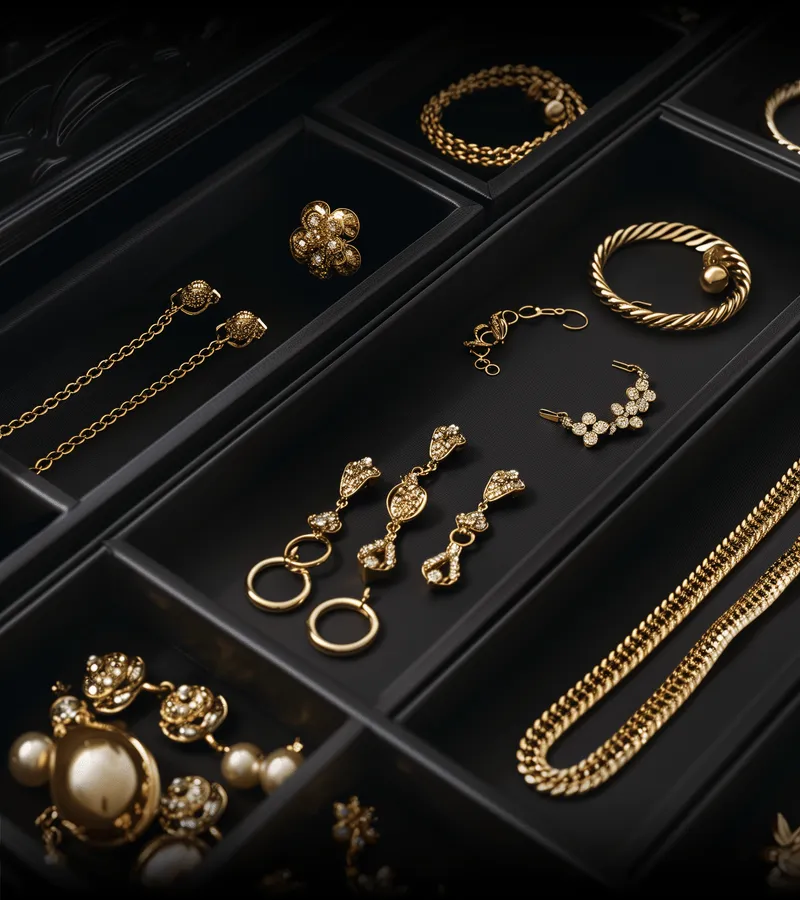
We buy gold jewellery across all karats and in any condition. Here is exactly what we accept:
-
Gold Chains and Necklaces. Any karat, any length, any style. Broken links, missing clasps, kinks and bends: none of that removes the gold. We assess the metal content, not whether the piece is wearable.
-
Gold Bracelets and Bangles. Single pieces and full sets. The traditional Indian 22ct bangles we see regularly are worth significantly more per gram than 9ct pieces of a similar size, and we test every one to confirm this accurately in front of you. We also buy complete Indian wedding sets, multi-piece bridal jewellery, and sacred pieces such as mangalsutras and thalis, which are covered in more detail below.
-
Gold Rings. Wedding bands, engagement ring mounts, dress rings, signet rings. If the piece has stones, we will tell you clearly what the gold content is worth. Rings missing stones still contain gold and still have real value.
-
Gold Earrings. Studs, hoops, drops. Single earrings with no pair. Old or unfashionable styles. The design does not affect the gold content.
-
Other Gold Jewellery. Pendants, charms, brooches, watch cases, dental gold, antique pieces. If you are unsure whether something contains gold, bring it. We test everything and tell you what you have.
A straight answer on gold-plated items: Gold plating is a thin surface layer over a base metal. Plated items contain negligible gold and are not worth selling as gold. If you bring plated pieces, we will test them and tell you clearly and without fuss. You deserve to know before you make any decision. Not everything that looks gold is gold, and we will always tell you which is which.
If you also have Krugerrands, bullion coins, or gold bars, those follow a slightly different valuation process and we cover them in full on dedicated pages. See our Krugerrand selling guide, our gold coins buying page, and the all gold forms we buy overview for the complete picture. This page focuses on jewellery specifically.
What Makes Your Gold Jewellery Valuable
Whether these pieces came from a parent, a past chapter, a gift you never wore, or a box of inherited odds and ends you have been putting off sorting: they carry real value. The gold in them has not gone anywhere. It is exactly as real as it was on the day it was made.
Two things determine what your jewellery is worth: the karat and the weight. Karat tells you how much of the piece is pure gold. Weight tells you how much of that purity you have. A 22ct bangle is worth more per gram than a 9ct chain because it contains more gold per gram. A heavier piece of the same karat is worth more than a lighter one because there is simply more metal in it. Those two factors, combined, produce the figure.
This is exactly why we test and weigh everything in front of you. You see the testing equipment read the karat. You see the scale read the weight. Nothing is decided in a back room. Nothing is announced from a calculation you were not part of. The offer is produced from numbers you watched being generated, explained in plain terms, and handed to you to accept or decline. The price we quote is the price you receive, in your account, via instant EFT, before we leave.
No hidden deductions. No surprise fees. No “refining charge” subtracted after the fact. What we tell you is what you get.
If you want a specific figure before booking, the honest answer is that we need to see your actual pieces. Contact us via the form, WhatsApp, or phone and we will arrange a free, no-obligation appointment. You will see the testing, the weights, and the offer for yourself.
Factors That Affect Gold Jewellery Prices in South Africa
Gold is a global market, and a handful of real forces drive the price that ultimately flows through to what your jewellery is worth. Knowing them helps you understand the context, without needing to track them yourself.
- The international spot price. Gold is quoted in US dollars per troy ounce on global markets. That figure is the benchmark that refineries, bullion dealers, and central banks work from. It moves continuously through the trading day.
- The USD/ZAR exchange rate. Because the benchmark is set in dollars, the rand value of gold depends on where the rand sits against the dollar. A weaker rand means the rand price of gold tends to rise, even when the dollar price is unchanged. A stronger rand has the opposite effect.
- Global jewellery demand. India and China together account for more than half of the world’s new gold jewellery purchases. Wedding seasons, festival calendars, and changes in consumer spending power across those markets influence the price through the year.
- Central bank activity. Central banks in China, India, Turkey, and elsewhere have been consistent net buyers of gold in recent years. That institutional demand provides a floor under the market that did not exist a decade ago.
- Investment flows. When investors move into gold as a safe-haven asset during periods of geopolitical tension or inflation, demand rises and the price tends to follow. Gold-backed ETF holdings and bullion coin demand are real signals of this.
- Mining supply. South Africa was once the world’s largest gold producer and is now a relatively smaller contributor to global output. Global mine supply is relatively stable year to year, but disruptions matter when they occur.
We do not advise when to sell. That is your decision, based on your own circumstances and what matters to you right now.
Understanding Karats: 9ct, 14ct, 18ct, 22ct, 24ct
Karat is how gold purity is measured. The number tells you how many parts out of 24 are pure gold. 24ct gold is essentially 100% pure. 9ct gold is 9 parts gold and 15 parts other metals, making it 37.5% pure. The higher the karat, the more gold per gram, and the more each gram is worth.
In South Africa, you will encounter these karats most commonly:
| Karat | Gold content | What you typically find | Hallmark stamp |
|---|---|---|---|
| 24ct | 99.9% | Investment bars, some coins | 999 or 999.9 |
| 22ct | 91.7% | Indian bangles, traditional sets, wedding jewellery | 916 or 22K |
| 18ct | 75% | Fine jewellery, Swiss watches, European pieces | 750 or 18K |
| 14ct | 58.5% | American and some European jewellery | 585 or 14K |
| 9ct | 37.5% | Most everyday SA jewellery: chains, rings, bangles | 375 or 9K |
Selling 9ct Gold Jewellery
9ct is the karat most South Africans have in their jewellery boxes. It became the standard for everyday jewellery in SA because it is durable and far less expensive to manufacture than higher-karat gold. Most chains, bangles, and rings sold by South African retailers over the past several decades are 9ct. That does not make them worth nothing. Each gram contains 37.5% pure gold, and depending on the weight of your pieces, a collection of 9ct jewellery can add up to a meaningful sum. Many clients who bring in a handful of old 9ct pieces leave pleasantly surprised.
Selling 18ct Gold Jewellery
18ct gold is 75% pure and is typical of fine jewellery: quality rings, watches, European and designer pieces. It is worth significantly more per gram than 9ct. If you have older fine jewellery, a 750 or 18K stamp on the piece is what to look for. Pieces without a visible stamp are tested regardless.
Selling 22ct Gold Jewellery
22ct is 91.7% pure and is the standard for traditional Indian jewellery in South Africa. Bangles, sets, and wedding pieces brought from India or bought locally within the Indian community are almost always 22ct. A 22ct bangle that looks similar in size to a 9ct one from a high-street retailer can be worth more than twice as much per gram. If you have Indian community jewellery to sell, the karat difference matters a great deal and our testing identifies it immediately.
Indian Gold Jewellery: Mangalsutras, Thalis, Bangles, and Wedding Sets
The Indian South African community carries some of the strongest gold jewellery traditions in the country, and the pieces that come from those traditions are often among the most beautiful and highest-karat gold we see. We regularly value and buy mangalsutras, thalis (the sacred wedding pendants central to Tamil and other South Indian families), full wedding sets combining necklace, earrings and bangles, heavy kadas, bell-shaped jhumkas, long haram necklaces, tikkas, nath nose rings, vaddanam waist belts, bajuband armlets, and complete multi-piece bridal sets. Almost all of these are 22ct, occasionally 24ct, so the per-gram value is substantially higher than the 9ct jewellery most South African high-street retailers sell. A 22ct kada can be worth more than twice as much per gram as a 9ct bangle of similar size.
Mangalsutras and thalis are sacred. They are tied directly to marriage itself, and the vast majority of families will never part with them. When they do come to a buyer, it is almost always after a bereavement, a major life change, or a generational inheritance where a family is ready. We know what these items are, we know what they mean, and we handle them with the care they deserve. We do not encourage anyone to sell pieces like these. We are simply here, quietly, when a family decides the time has come.
Wedding sets are typically assessed as a complete set in one sitting, so a full combination of necklace, earrings, bangles, and tikka can be valued together rather than piece by piece. That matters practically, because families often inherit whole sets and want a single, coherent answer. GoldTrust is a member of the Jewellery Council of South Africa. We are part of the jewellery trade in this country, not outsiders passing through.
Bring the full set or the individual piece to your appointment. Every item is tested and weighed in front of you. The offer is explained clearly before any decision is made. Same process, same transparency, every time.
Selling 14ct Gold Jewellery
14ct gold (58.5% pure) is less common in South Africa but turns up in pieces brought from Europe or the United States, or in some vintage items. The 585 stamp is what identifies it. It sits between 9ct and 18ct in value per gram.
Selling 24ct Gold Jewellery
Pure gold jewellery at 24ct is rare, as 24ct gold is too soft for most jewellery applications. You are more likely to encounter 24ct as bars or investment pieces. For anything in jewellery form, the 999 or 24K stamp confirms it. If you have bars or coins to sell alongside your jewellery, see our page covering all gold forms we buy.
How to Find the Hallmark on Your Jewellery
- Rings: inside the band
- Chains and bracelets: near the clasp, or on the tag attached to it
- Pendants: on the bail (the loop that attaches to the chain)
- Earrings: on the post, backing, or the connecting part near the hook
A magnifying glass or loupe helps with small stamps. Older pieces, antique jewellery, and items made in regions with different hallmarking conventions may carry no visible stamp at all. This does not mean there is no gold. We test every item regardless of whether a stamp is present, so you always know exactly what you have.
Gold Jewellery with Diamonds and Other Stones
Jewellery with diamonds or other stones set in gold is something we see regularly: engagement rings, dress rings, tennis bracelets, pendants with centre stones, eternity bands, cluster rings. Our assessment of the piece starts with the gold content, which we test and weigh in front of you and explain clearly. Where a piece carries diamonds or other stones of meaningful substance, we will discuss with you at the appointment if those factor into the overall offer. Nothing is removed from the piece out of sight. No stones vanish into a back room. If you have gold and diamond jewellery to sell, bring it in and we will go through each item with you.
What About Broken Gold Jewellery?
Broken jewellery is one of the most common things we see. A snapped chain. A bent bangle. A ring with a missing stone or a cracked shank. The piece may be unwearable, but the gold content is unchanged. We assess the metal, not the condition. A broken 22ct bangle is worth the same gold value as an intact one of the same weight. Bring whatever you have.
You can book a private appointment at any of our offices: across Gauteng, including Sandton, Rosebank, Pretoria, Centurion, Boksburg, Cresta, Bedfordview, and Montana. We also serve Umhlanga, Cape Town, Durbanville, George, and Westville . Home visits are also available in many areas, subject to availability. We test everything in front of you, explain every result, and you make your decision with complete information.
Frequently Asked Questions
Do you buy Indian gold jewellery like mangalsutras, thalis, and wedding sets?
How much is my 22ct Indian gold bangle or wedding set worth?
How much is my gold jewellery worth in South Africa?
How much can I sell 9ct gold for in South Africa?
How much can I sell 18ct gold for in South Africa?
How much can I sell 22ct gold for in South Africa?
Is broken gold jewellery worth anything?
Is it worth selling my old gold jewellery?
What is the best way to sell gold jewellery in South Africa without getting ripped off?
Can I sell gold jewellery that has diamonds or other stones set in it?
Do you buy gold and diamond jewellery together, or only the gold?
How does the selling process work for gold jewellery?
Do I need a receipt or certificate to sell gold jewellery?
Can I sell inherited gold jewellery?
Is GoldTrust a licensed gold jewellery buyer in South Africa?
What if I do not accept the offer for my jewellery?
Where can I sell gold jewellery near me in South Africa?
Should I sell gold jewellery to a pawn shop or a specialist buyer?
What is the hallmark on my gold jewellery and what does it mean?
Do you also buy Krugerrands and gold coins alongside jewellery?